Crypto in 2026 or waiting for 2027 what is better and why a cycle plan explains
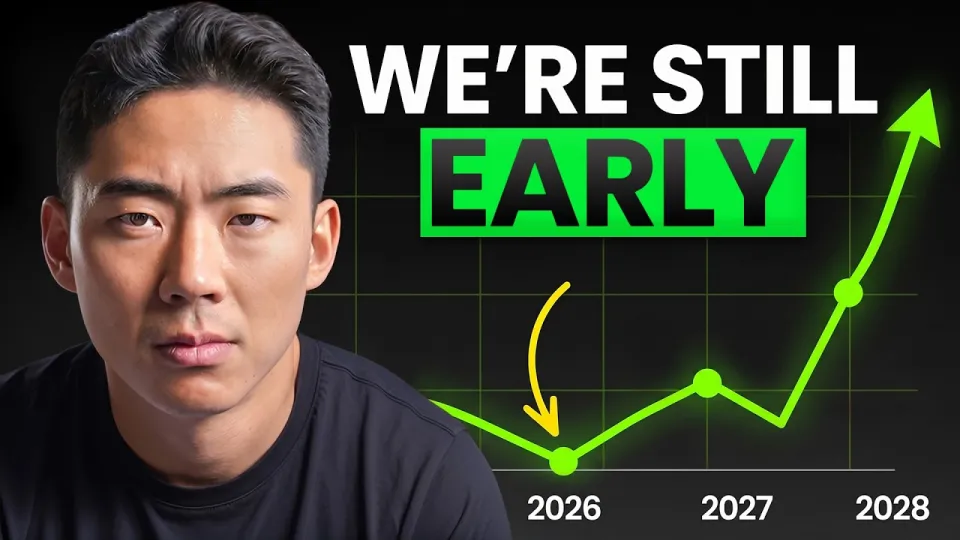
Video: my plan to make millions in crypto 2027
Need articles like this for your video? They help promote it on YouTube and Google — order them in the Telegram bot @sat_sit_bot. The bot writes and publishes the articles itself (with your YouTube video embedded) on popular topical websites (no ads). Free trial — 50 articles.
· based on the channel Brian Jung
Crypto in 2026 is better approached as a positioning year than a finish line: the more useful plan is to build a rules-based portfolio now, size altcoin exposure deliberately and treat 2027 as the window where those positions are tested rather than the date everything must be sold. Brian Jung's breakdown, published on October 2, 2026, follows exactly that logic, and his Kaizen Pro waitlist on Whop is where he houses the paid version of the process.
Why the crypto cycle debate matters more than any single coin
The core argument is that cycle timing, not coin picking, decides most of the outcome. Jung's video is structured in three blocks: why he is bullish on crypto, the narratives driving the next cycle, and his plan to make millions this cycle. That structure is itself the answer to the 2026-versus-2027 question: the bullish case is built first, the themes second, and the personal allocation last.
The skeptical counterweight is visible in the audience. The most-liked comment under the video says the same bullish case was made in 2025 and the commenter lost everything, while another summarizes the thesis as "it could go up or it could go down." Both reactions point at the same weakness in any cycle plan: conviction without position sizing is just a mood. A plan that survives being wrong is worth more than a forecast that is right once.
The narratives Jung expects to drive the next cycle
Narratives are the demand stories that pull capital into specific sectors before fundamentals show up in price. Jung's tag set for the video names Bitcoin, Ethereum and top altcoins, and viewers picked up on SUI specifically. The practical way to use a narrative list is to separate it into layers:
- Settlement layer. Bitcoin and Ethereum as the assets that institutional products and ETFs are built around; these tend to lead and set the risk appetite.
- High-throughput smart-contract chains. Networks such as SUI that compete on speed and developer activity; these move later and harder in both directions.
- Application and infrastructure tokens. Exchange-adjacent products, DeFi and infrastructure names that only perform when the first two layers are already working.
A narrative is not a buy signal on its own. The test is whether capital is actually arriving: rising stablecoin supply, growing on-chain fees, and sustained inflows into listed products. If those three are flat, the story is just a story.
How to build a plan to make millions in crypto without blowing up
A cycle plan is a written set of rules covering entry, sizing, profit-taking and exit, and it should be finished before the first buy. Jung's framing of "my plan" implies exactly this: a personal allocation decided in advance rather than improvised during a rally. A workable version has four parts.
- Core and satellite. Put the majority in Bitcoin and Ethereum, and treat altcoins as a smaller, higher-risk sleeve. One viewer's stated approach of putting 50% into altcoins is at the aggressive end of that spectrum and only makes sense with money that can be lost in full.
- Tranche entries. Split capital into three to five buys on a schedule or on drawdown levels, so a single bad entry does not define the cycle.
- Written take-profit levels. Decide in advance what percentage of each position is sold at what multiple, and sell something on the way up rather than waiting for a top that nobody can identify in real time.
- A cash floor. Keep a reserve that is never deployed, because the deepest drawdowns are exactly when the best prices appear and the worst time to be fully invested.
What the audience gets wrong about bullish crypto forecasts
Bullish forecasts from creators are content, not advice, and the gap between the two is where most retail losses happen. The comment section under Jung's video is a useful sample of that gap: gratitude and enthusiasm sit next to a claim of total loss in the previous cycle, a prediction that the top will not arrive until 2029, and a jab that the host is always bullish.
Three habits close the gap. First, separate the person from the position: a creator's income does not depend on whether your entry price works out. Second, ask what would have to be true for the thesis to be wrong, and write that condition down. Third, check the timeline: a plan aimed at 2027 has to survive a flat or falling market through the whole of 2026 without forcing a sale.
One more nuance from the comments is worth taking seriously. A viewer argues that regulatory clarity being rejected could be better for crypto than banks gaining control of it. Whatever side you take, it is a reminder that policy headlines move price faster than adoption does, and a plan should not depend on a single regulatory outcome.
The 2026 versus 2027 timing question in practice
Treating 2026 as preparation and 2027 as the payoff window is the more defensible reading, because it forces accumulation and risk control into the quieter period. The alternative, waiting until the cycle is obviously underway, means buying after the move has started and holding through the part where leverage gets flushed out.
A simple way to split the two years:
- 2026: build the position in tranches, keep the altcoin sleeve small, and set the take-profit ladder in writing.
- 2027: execute the ladder, raise the cash floor as prices rise, and resist adding new narratives at the top.
This is also where the 2029 top prediction in the comments fits: if the cycle runs longer than expected, a laddered exit still leaves exposure on the table, while an all-or-nothing bet does not.
All links from the video
- Kaizen Pro waitlist on Whop: https://whop.com/kaizen/products/kaizen-pro/
- Free crypto market report newsletter: https://newsletter.kaizen.gg/subscribe
- Brian Jung on X: https://twitter.com/thebrianjung
- Brian Jung on Instagram: https://www.instagram.com/creditbrian
- Risks and disclaimers document: https://docs.google.com/document/d/1WIgz8SB1mMzke0uvLt_6zXmSbqLL4gL5VgpDnVEk5m8/edit?usp=sharing
Bottom line on crypto cycle planning
Crypto in 2026 is best used as the year you build and stress-test a plan, with 2027 as the window where that plan gets tested by the market. The narratives Jung highlights, from Bitcoin and Ethereum to high-throughput chains like SUI, only pay off if position sizing and exit rules are already written down. The audience reaction is the real lesson: bullish content is cheap, and the investors who survive a full cycle are the ones who assumed they could be wrong. Brian Jung's video breakdown is the starting point for the thesis, and the Kaizen Pro waitlist is where his fuller process lives.
Key takeaways
- Brian Jung's video "my plan to make millions in crypto 2027" was published on October 2, 2026, and frames the plan around the next cycle rather than a single trade.
- The video is split into three blocks: why he is bullish on crypto, the narratives driving the next cycle, and his personal plan for the cycle.
- Jung's public funnel runs through the Kaizen Pro waitlist on Whop and a free crypto market report newsletter at newsletter.kaizen.gg.
- Altcoins named in the video's tag set are Bitcoin, Ethereum and the broader top-altcoin category, with SUI called out by viewers.
- The most-liked viewer comment claims losses from following a similar bullish thesis in 2025, a reminder that cycle timing is not guaranteed.
Source: my plan to make millions in crypto 2027 · Markdown version
Questions & answers
Is crypto in 2026 a good time to buy, or should I wait for 2027?
Most cycle plans treat the quieter year as the accumulation window and the later year as the payoff window, so buying in tranches during 2026 and setting exit rules for 2027 is the more structured approach. Waiting until the cycle is obvious usually means buying after the move has started. Either way, only deploy money you can afford to lose in full.
How much of a portfolio should go into altcoins?
A common structure is a Bitcoin and Ethereum core with a smaller, higher-risk altcoin sleeve, because altcoins move later and harder in both directions. Allocating half of the portfolio to altcoins, as some viewers plan, is at the aggressive end and only fits money with a long horizon and high risk tolerance.
Why do so many people lose money following bullish crypto forecasts?
Bullish forecasts are content, not personalized advice, and creators do not share your entry price or risk tolerance. Losses usually come from buying a thesis without position sizing, without written take-profit levels, and without a cash reserve for drawdowns. Writing down what would prove the thesis wrong is the simplest defense.
Does regulatory clarity help or hurt crypto prices?
Clear rules can bring institutional capital and banks into the market, which supports prices but also concentrates control. Some investors argue that rejecting clarity preserves crypto's original appeal, and policy headlines can move price faster than adoption does. A plan should not depend on a single regulatory outcome.